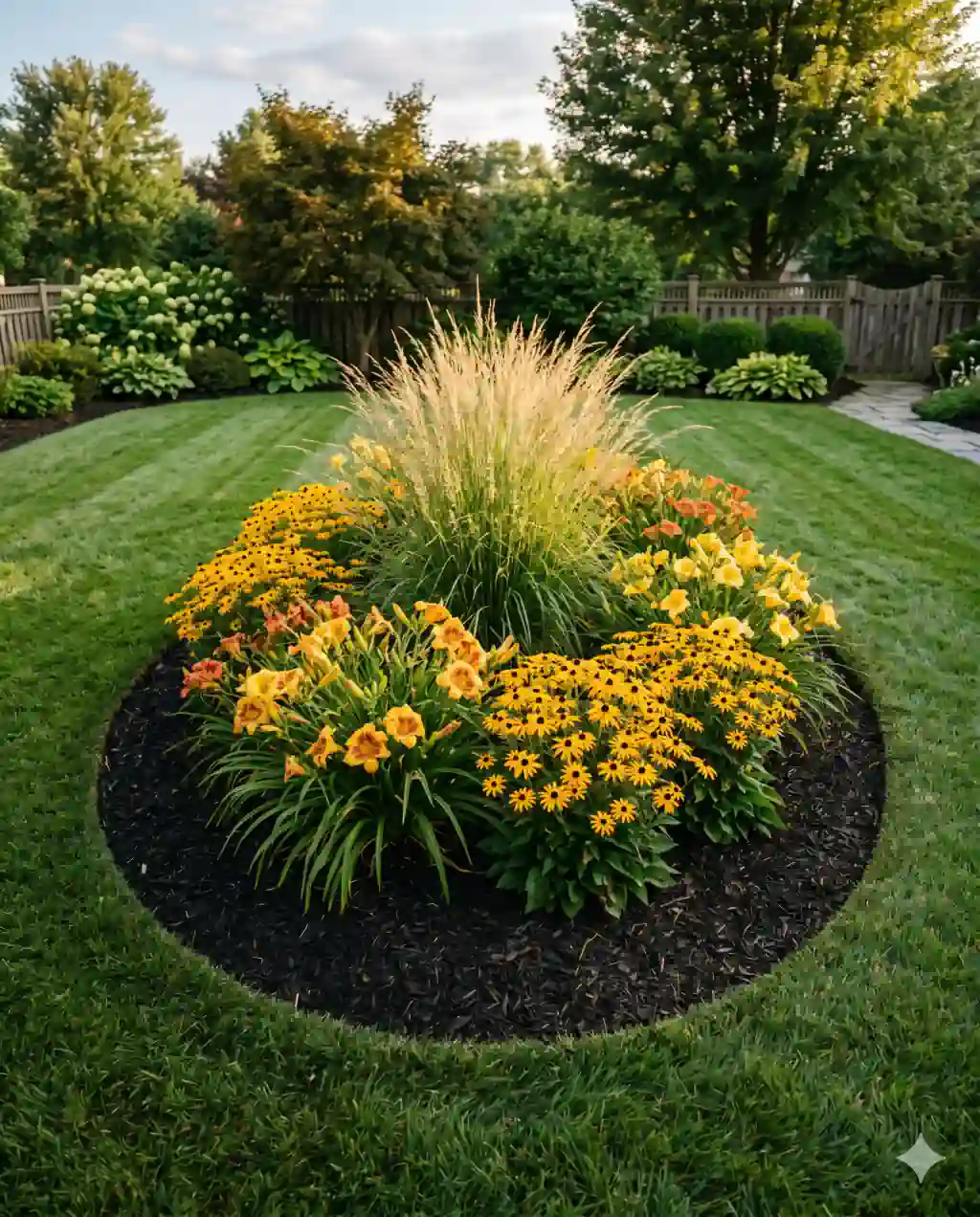
Mythos 1 — "Ein Oval ist im Grunde ein Kreis, also nimm den Langachsen-Durchmesser"
Fakt: Die Langachse als Kreisdurchmesser zu nehmen, überschätzt die Fläche bei einem typischen 10 × 6 ft Oval um 67 % (78,5 sq ft angenommen vs. 47,1 sq ft tatsächlich). Die korrekte Formel nutzt beide Achsen: π × (Länge ÷ 2) × (Breite ÷ 2).
Für den 10 × 6 ft Fall: π × 5 × 3 = 47,12 sq ft. Bei 3 Zoll Tiefe sind das 11,8 cu ft, also 6 Säcke à 2 cu ft Mulch — nicht die 9 Säcke, die dir die "einfach die Langachse nehmen"-Abkürzung kaufen lassen würde.
Mythos 2 — "Das umschließende Rechteck ist nahe genug"
Fakt: Das Oval innerhalb eines Rechtecks deckt π ÷ 4 ≈ 78,5 % der Rechtecksfläche ab. Die verbleibenden 21,5 % liegen in den vier Ecken, die das Oval nicht erreicht. Rechteckiges Volumen für ein ovales Beet zu bestellen, überschießt um etwa 27 % — genug, um auf einem 200-sq-ft-Beet 4 ungeöffnete Säcke in der Garage zu lassen.
Mythos 3 — "Oval und Ellipse sind verschiedene Formen"
Fakt: Mathematisch ist ein "Oval" jede geschlossene konvexe Kurve und eine "Ellipse" der spezielle Fall mit zwei senkrechten Achsen. Die Ellipsenformel ist nur dann eine gute Schätzung, wenn das Beet gleichmäßig und annähernd symmetrisch ist.
Die Mathematik, sauber angewendet
Übliche Ovalgrößen bei 3 Zoll Tiefe
| Länge × Breite (ft) | Fläche (sq ft) | Volumen (cu ft) | 2 cu ft Säcke | Kubikyards |
|---|---|---|---|---|
| 6 × 4 | 18.85 | 4.71 | 3 | 0.17 |
| 8 × 5 | 31.42 | 7.85 | 4 | 0.29 |
| 10 × 6 | 47.12 | 11.78 | 6 | 0.44 |
| 12 × 7 | 65.97 | 16.49 | 9 | 0.61 |
| 14 × 8 | 87.96 | 21.99 | 11 | 0.81 |
| 18 × 10 | 141.37 | 35.34 | 18 | 1.31 |
Das Längen-Breiten-Verhältnis zählt für die visuelle Balance: 1,5× bis 2× wirkt wie eine elegante Ellipse, 1× wirkt wie ein Kreis und über 3× beginnt es wie ein Band auszusehen. Die Verhältnisse 10 × 6 und 12 × 7 sind der Sweet Spot für Wohngrundstücke.
Ein Oval sauber einfassen
- Flexible Kunststoff- oder Stahl-Rolleneinfassung folgt der Kurve in einem durchgehenden Lauf — einfachste Installation.
- Backstein- oder Betoneinfassungen brauchen einen engen Kurvenradius (unter 12 Zoll), um sauber zu schmiegen; bei größeren Ovalen sehen sie in kurzen geraden Stücken um die "Enden" besser aus.
- Spatengeschnittene Kanten (ohne physische Einfassung) wirken am natürlichsten, benötigen aber alle 6–8 Wochen Nachbesserung, um scharf zu bleiben.
- Steinbordüren funktionieren bei Ovalen über 10 ft Länge, wo der Kurvenradius flach genug ist, dass jeder Stein nur leicht angewinkelt ist.