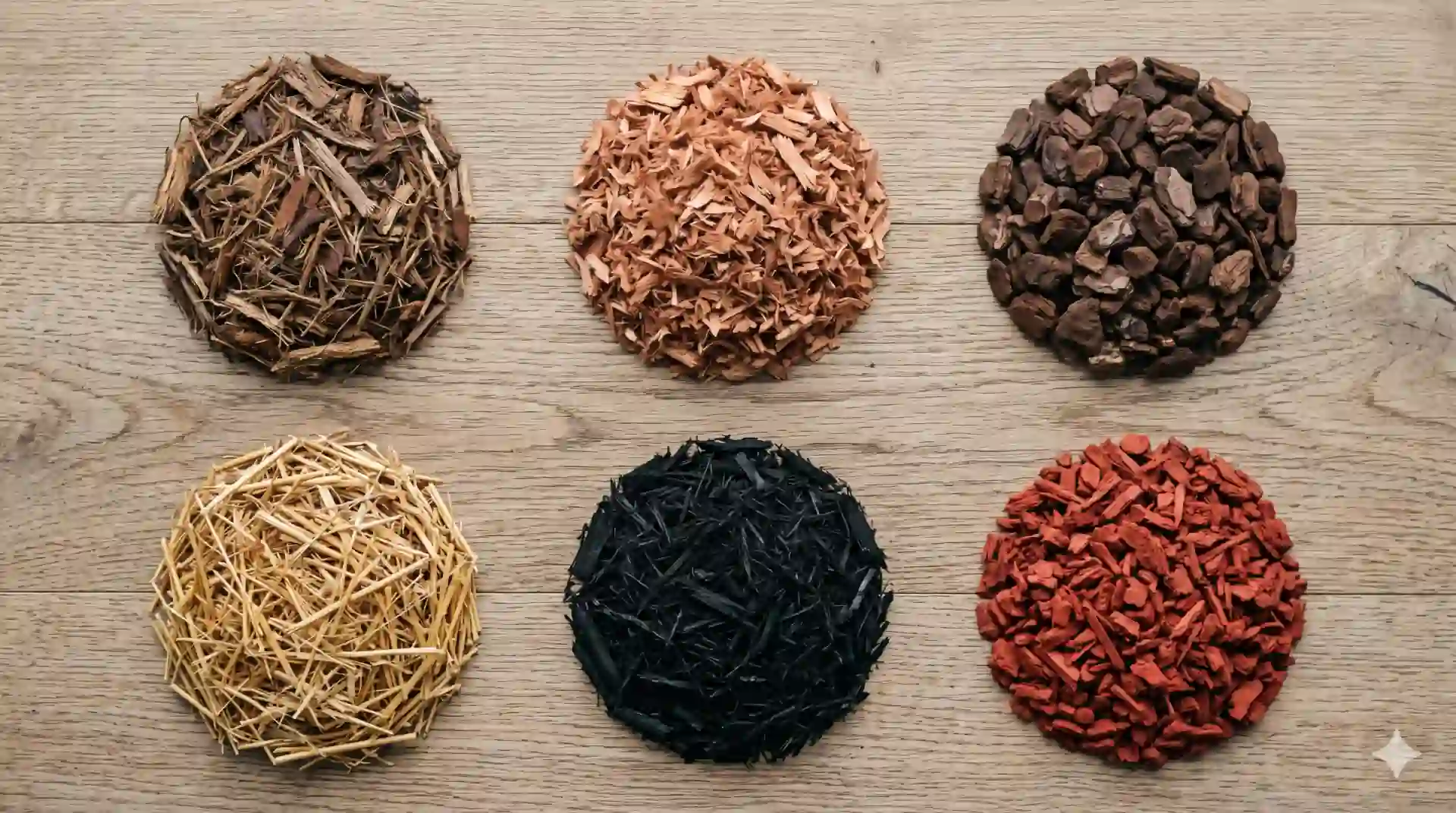
올바른 멀칭재 고르는 법
한 가지 질문부터 시작하세요. 이 멀칭재에게 어떤 일을 시키고 싶은가? 기초 화단의 잡초를 막을 것인가? 나무 뿌리를 보온할 것인가? 집 앞이 보기 좋아 보일 것인가? 텃밭에서 비용을 아낄 것인가? 각 목표마다 가장 잘 맞는 자재가 다릅니다.
다섯 갈래 의사결정 매트릭스
- 외관이 최우선: 검정·갈색 염색 활엽수 또는 프리미엄 삼나무. 가격은 더 들지만, 화단은 한 시즌 내내 깔끔한 모습을 유지합니다.
- 나무 주변: 분쇄 활엽수 또는 소나무 껍질 청크. 둘 다 보온이 잘되고, 분해되며 장기적으로 토양 구조를 만들어 줍니다.
- 산성 토양을 좋아하는 식물: 소나무 껍질이나 소나무 잎 — 둘 다 토양을 약간 산성화시켜 철쭉, 블루베리, 만병초에 적합합니다.
- 텃밭: 짚이나 고운 우드칩. 한 시즌 안에 분해되어 영양이 풍부한 흙이 됩니다. 식용 작물 근처에는 염색 멀칭재나 고무 멀칭재를 절대 사용하지 마세요.
- 놀이터: 낙하 충격 흡수 인증(ASTM F1292)을 받은 고무 멀칭재나 가공 목섬유. 사용하는 놀이기구의 낙하 높이에 맞춰 인증된 제품을 선택하세요.
ASTM F1292는 놀이터 바닥재가 장비의 지정된 임계 낙하 높이에서 시험할 때 머리 충격 심각도(HIC ≤ 1,000)와 최대 g 가속도(≤ 200 g)를 제한하도록 요구합니다. 공학목재섬유와 고무 분쇄 제품 모두 시공 두께에서 인증받아야 합니다.
특정 상황에서 피해야 할 멀칭재
카카오 껍질 멀칭재에는 초콜릿을 개에게 유독하게 만드는 성분인 테오브로민이 들어 있습니다. 반려동물이 돌아다니는 마당에는 절대 사용하지 마세요.
출처가 불분명한 염색 멀칭재는 CCA(크롬화 구리 비소) 처리 팔레트로 만든 경우가 있습니다. 원목 또는 미처리 목재임을 인증하는 공급업체에서만 구매하세요.
식용 작물 근처의 고무 멀칭재. 연구에 따르면 시간이 지나면서 고무 분쇄물에서 미량의 아연과 기타 금속이 토양으로 용출될 수 있습니다. 놀이터와 관상용 화단으로만 한정해 사용하세요.
놓치기 쉬운 무료 멀칭재 공급처
- ChipDrop.com — 우드칩을 무료로 처분하려는 수목 업체와 일반 주택을 연결해 주는 서비스입니다.
- 지자체 퇴비 프로그램. 미국의 많은 도시는 노변 수거 정원 폐기물로 만든 멀칭재를 무료로 나눠 줍니다. 트럭과 삽을 가지고 가세요.
- 수목 관리 업체. 지역 수목 업체에 전화해 보세요 — 매립 수수료를 아끼기 위해 트럭 한 대 분량(5~10 cu yd, 약 3.8~7.6 m³)을 무료로 배달해 주는 경우가 많습니다.
- 리프몰드(낙엽 부엽토). 가을에 낙엽을 자루에 담아 1년만 두면 이듬해 봄에는 진한 프리미엄 멀칭재가 됩니다. 비용은 0원.