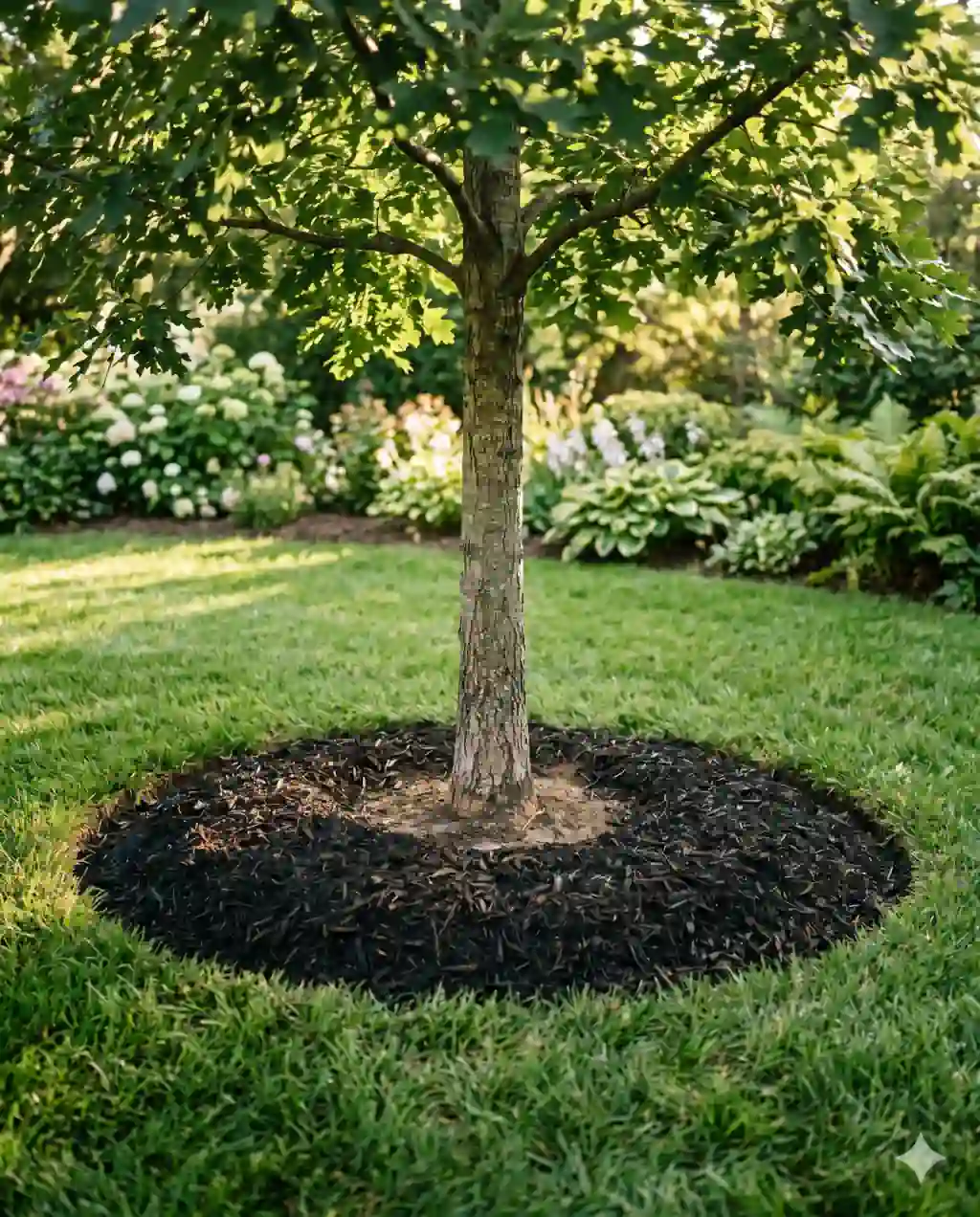
Errore #1 — il vulcano di pacciame
Cammina in qualsiasi nuova suddivisione suburbana e conta i cumuli a forma di cono di pacciame costruiti contro i tronchi degli alberi. Ognuno sta lentamente uccidendo l'albero che circonda. La corteccia è un tessuto respiratorio, non una radice — non è progettata per vivere sottoterra. Ammucchia pacciame contro di essa e tre modalità di fallimento iniziano contemporaneamente: marciume della corteccia, soffocamento del cambio e tane invernali di roditori che rosicchiano la corteccia interna.
- Cronologia visibile del danno — i primi segni di morte della chioma e di carpofori fungini appaiono 3–5 anni dopo l'applicazione del vulcano. A quel punto il cambio è spesso morto tutto attorno al tronco.
- La soluzione — tira indietro il pacciame a un anello di 2–3 pollici di suolo nudo attorno alla corteccia, rastrema la profondità da 1 pollice all'anello interno a 3–4 pollici al bordo esterno della zona radicale.
- Non spalare pacciame sulla corteccia — scaricalo a 6 pollici di distanza e rastrella solo verso l'esterno.
Le indicazioni arboricolturali (ISA / Trees Are Good, basate sulla pratica ANSI A300) raccomandano pacciame organico non più profondo di circa 10 cm sulla zona radicale e tenuto lontano dal colletto, affinché il cambio possa scambiare gas.
Errore #2 — fermarsi prima della linea di gronda
| Età albero / chioma | Diametro anello ideale | Sq ft | Cu ft @ 3″ | Sacchi 2 cu ft |
|---|---|---|---|---|
| Appena piantato (chioma 4 ft) | 5 ft | 20 | 5 | 3 |
| Giovane (chioma 8 ft) | 8 ft | 50 | 12.5 | 7 |
| In via di stabilizzazione (chioma 12 ft) | 12 ft | 113 | 28 | 15 |
| Maturo (chioma 20 ft) | 20 ft | 314 | 78.5 | 40 |
| Patrimoniale (chioma 30 ft) | Linea di gronda | 707 | 177 | 89 |
Errore #3 — non rinfrescare mai o ricominciare sempre
- La trappola del rinfresco annuale. Ogni primavera la gente strappa via il vecchio pacciame e ne mette di fresco — e seppellisce le corone più profonde a ogni ciclo. Dopo 3 anni il livello del suolo attorno all'albero è 2–3 pollici più alto del resto del prato.
- La trappola dell'anello trascurato. Salta del tutto il rinfresco e il pacciame si compatta in una crosta di 1/2 pollice che fa scorrere l'acqua lontano dalle radici, facendo l'opposto di ciò per cui è il pacciame.
- Il modello giusto. Rastrella il pacciame esistente piatto per rompere la crosta. Aggiungi 1 pollice di fresco sopra. La profondità totale resta a 3–4 pollici. Ripeti annualmente. L'albero non vede mai sepoltura a livello del suolo.
Cosa dice effettivamente ANSI A300
ANSI A300-2023 — Tree Care Operations: Mulching è lo standard nazionale americano che gli arboricoltori seguono in ogni lavoro. È univoco su profondità, rastrematura e buffer:
- Profondità: 2–4 pollici di pacciame organico sopra la zona radicale (3 pollici è il tipico raccomandato).
- Rastrematura: Riduci a 1 pollice entro 6 pollici dal tronco.
- Buffer: Mantieni un anello di 2–3 pollici di suolo nudo in contatto diretto con la corteccia — mai contatto con il pacciame.
- Estensione: Copri la zona radicale fino alla linea di gronda dove le condizioni del sito lo consentono.
- Materiale: Pacciame organico grossolano (legno duro triturato, trucioli di legno da arboricoltori). Evita strati fini di compost che si incrostano.