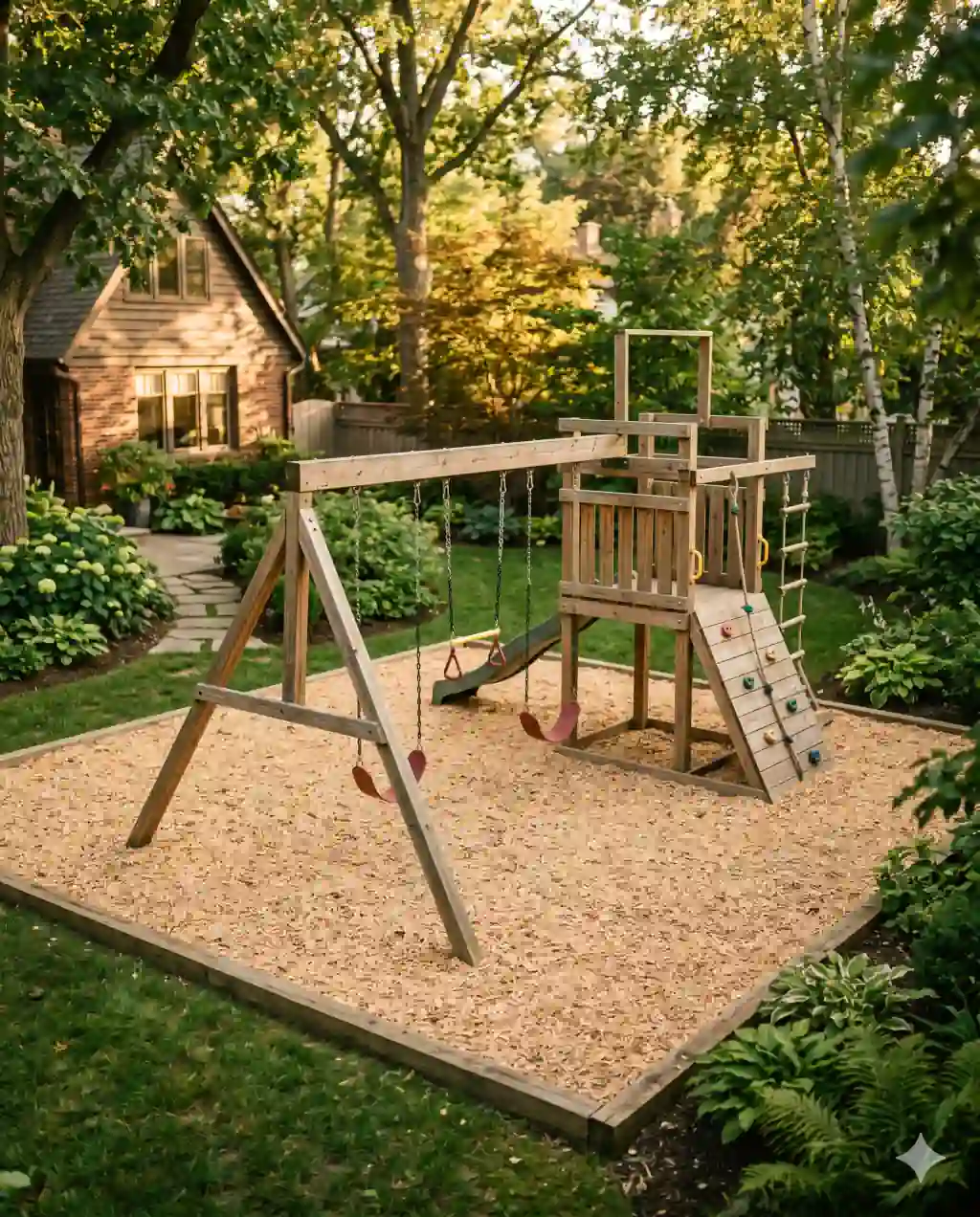
Drei Dokumente, die du brauchst, bevor du einen Sack auskippst
Für einen Spielplatz können CPSC-Leitlinien, einschlägige ASTM-Normen, Produktprüfungen und örtliche oder betreiberseitige Vorgaben gelten. Kläre vor der Bestellung, welche Unterlagen für den konkreten Standort erforderlich sind.
| Dokument | Was es spezifiziert | Bestehenskriterium |
|---|---|---|
| ASTM F1292 | Stoßdämpfungstests für jede Oberfläche unter Spielgeräten | Head Injury Criterion (HIC) ≤ 1000 und g-max ≤ 200 |
| ASTM F2075 | Engineered Wood Fiber (EWF) Partikelspezifikation | ≤ 30 % passieren Sieb #16; kein Metall, Farbe oder behandeltes Holz |
| CPSC Public Playground Safety Handbook (2025) | Nutzungszonen, Fallhöhen, Layout, Einbau und Wartung | Aktuelles Handbuch und Geräteplan befolgen |
ASTM F1292 verlangt, dass Spielplatzbeläge die Kopfaufprallschwere (HIC ≤ 1.000) und die maximale Beschleunigung (≤ 200 g) bei Prüfung an der angegebenen kritischen Fallhöhe des Geräts begrenzen.
Fallhöhe treibt die Tiefe — nicht umgekehrt
ASTM F1292 stuft den Belag nach "kritischer Fallhöhe" ein — dem maximalen Sturz, bei dem die Oberfläche HIC unter 1000 in Labortests hält. CPSC Tabelle 2 in Pub 325 veröffentlicht die am häufigsten zitierten Werte für Engineered Wood Fiber, installiert und verdichtet.
| What to verify | Source | Requirement |
|---|---|---|
| Equipment fall height | Equipment documentation or site measurement | Record the highest applicable fall height |
| Surfacing critical fall height | Current ASTM F1292 product test report | Must meet or exceed equipment fall height |
| Installed depth | Certified product instructions | Use the stated installation and maintenance depth |
Gummifliesen und loser Gummi werden unabhängig nach Produkt bewertet — es gibt keine universelle Tabelle, weil die Dichte variiert. Immer das IPEMA-zertifizierte Spezifikationsblatt des Herstellers zitieren (die International Play Equipment Manufacturers Association testet auf F1292 und F2075).
Nutzungszonenfläche berechnen (wo der Mulch tatsächlich sein muss)
CPSC Pub 325 §5.3 gibt die Nutzungszonen-Geometrie. Die Mulch-Grundfläche ist nicht nur unter den Geräten — sie erstreckt sich 6 ft in jede Richtung von jeder stationären Struktur und 2× die Drehpunkthöhe vor und hinter jeder Schaukel.
- Gerätegrundfläche messen (Länge × Breite der Struktur selbst)
- 6 ft auf jeder Seite für stationäre Nutzungszone hinzufügen
- Für Schaukeln: 2× die Kettenlänge zu den Front- und Heck-Nutzungszonen hinzufügen
- Für Rutschen > 4 ft hoch: 4 ft jenseits des Rutschenausgangs hinzufügen (CPSC §5.3.4)
- Gesamtfläche summieren, dann × Verdichtungstiefe, dann × 1,25 Installationsfaktor für Setzung
Der CPSC Public Playground Safety Handbook schreibt eine Nutzungszone von mindestens 1,8 m in alle Richtungen um stationäre Geräte vor — vor und hinter Schaukeln das Doppelte der Schaukelaufhängungshöhe.
Inspektions- und Auffülltakt
Konformität endet nicht bei der Installation. CPSC §5.3 und die CPSI-Zertifizierung der National Recreation and Park Association verlangen routinemäßige Inspektion, weil gesetzter und wanderter Belag schnell Fallhöhen-Bewertung verliert.
- Täglich/wöchentlich: Hochbelastungszonen (Rutschenausgang, Schaukellandung, Klettererbasis) auf Soll-Tiefe zurückrechen
- Monatlich: Tiefe an 4 festen Markierungspfählen messen; Werte protokollieren
- Vierteljährlich: vollständige visuelle Inspektion gemäß ASTM F1487 Checkliste
- Jährlich: auf Nominal-Installationstiefe nachfüllen; HIC an 3 zufälligen Punkten erneut testen, wenn kommerziell
- Alle 5–7 Jahre: komplette EWF-Entfernung und -Ersetzung (Faserabbau reduziert Dämpfung unabhängig von der Tiefe)