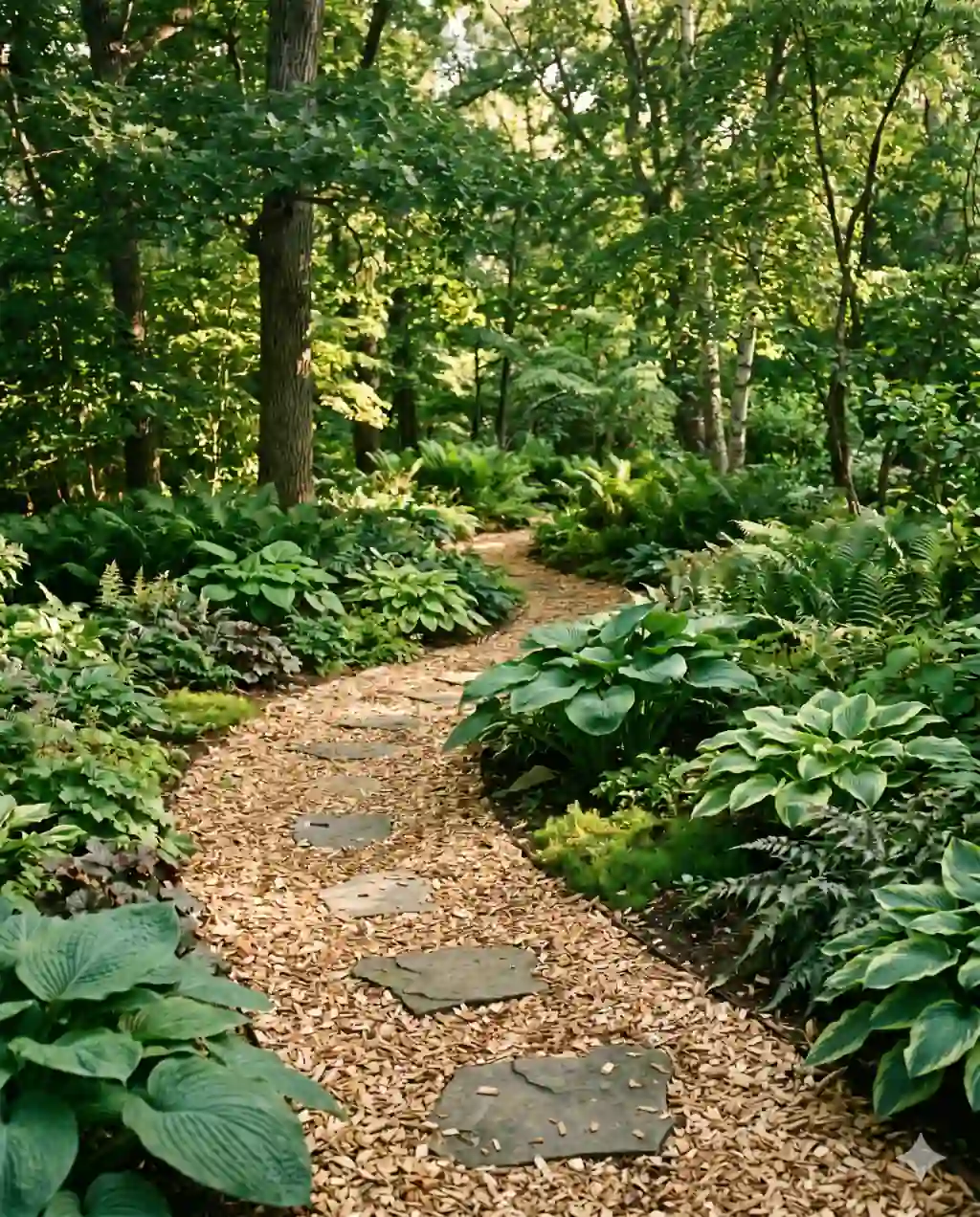
Hackschnitzel vs. Splitt vs. zersetzter Granit
Wähle die Oberfläche, bevor du die Tiefe wählst. Jede der drei hat ein klares "am besten für"-Profil, und die Versagensmodi sind vorhersehbar, wenn du vom Auftrag abweichst.
| Oberfläche | Am besten für | Kosten (US 2026) | Lebensdauer | Versagt wenn… |
|---|---|---|---|---|
| Baumpfleger-Hackschnitzel | Waldgärten, Gemüsegarten-Wege, Hundeläufe | Kostenlos (ChipDrop) oder $20–$40/cu yd | 12–18 Monate auf Tiefe | Auf Hängen > 8 % verwendet (wird weggespült) oder mit Mobilitätshilfen (sinkt ein) |
| Große Kiefernrindenstücke | Dekorative Zierwege, mittlere Formalität | $60–$90/cu yd oder $5/2 cu ft Sack | 3–4 Jahre | Barfuß begangen (scharf) oder in Brandrisikogebieten |
| Splitt (3/8 Zoll) | Drainagekritische Wege, ADA-artig feste Oberflächen, Seitenhöfe | $35–$55/Tonne (≈ 1 cu yd) | 10+ Jahre mit Randsicherung | Ohne 4-Zoll-Basisschicht installiert (wandert in den Boden) |
| Zersetzter Granit (DG) | Formale Gärten, mediterrane und Xeriscape-Stile | $50–$80/Tonne plus Stabilisator | 5–10 Jahre (stabilisiert) | Feuchte Klimata ohne gute Drainage (wird zu Schlamm) |
| Zedern-Stücke | Aromatische stark frequentierte Wege nahe Terrassen | $70–$110/cu yd | 3–4 Jahre | Säureliebende Pflanzbeete angrenzend (pH-Drift) |
Tiefe und Basisschicht — wo die meisten Wege versagen
Ein Hackschnitzelweg bei 2 Zoll wird nach einem Regen zu Schlamm. Die funktionale Mindesttiefe ist 4 Zoll, und 6 Zoll kaufen dir weitere 6 Monate zwischen Auffüllungen. Der größte Installationsfehler ist, Mulch direkt auf Gras zu legen, ohne Rasen zu entfernen oder eine Basis zu legen.
- 4 Zoll — Minimum für leichten, gelegentlichen Fußverkehr; alle 10–12 Monate auffüllen
- 6 Zoll — Standard für täglich genutzte Wege; alle 18 Monate auffüllen
- 8 Zoll — schwere Nutzung (kommerziell, Hundeläufe, Schlauchziehen); Erstjahres-Kompression ist 35–45 %
- Basisschicht — 2 Zoll Rasen abziehen, 1–2 Zoll verdichteten Splitt oder Sand für Drainage auf jedem Weg, der in Nassaisons genutzt wird, hinzufügen
- Randsicherung — Stein, Backstein, Stahl oder 2×6 Zeder; ohne kann ein Teil des Mulchs in angrenzende Beete wandern
Rechenbeispiel: ein 3 × 30 ft Gartenweg
Derselbe Weg in 3/8-Zoll-Splitt: 90 sq ft × 0,33 ft (4 Zoll verdichtet, kein Setzungsfaktor für Stein) = 29,7 cu ft = 1,1 cu yd. Bei $45/cu yd geliefert: $50 in Stein, plus $35 für eine 4-Zoll-Sand-und-Splitt-Basisschicht darunter = $85 Gesamtmaterial mit einem 10-jährigen Lebenszyklus vs. die 18 Monate des Hackschnitzelwegs. Die Splittoption wählen, wenn der Weg eine Senke kreuzt oder täglich mit einer Schubkarre genutzt wird.
Hybridwege und was NICHT zu tun ist
Der stärkste Wohngartenweg ist ein Hybrid: 2–3 Zoll Splittbasis für Drainage, getoppt mit 3 Zoll Baumpfleger-Hackschnitzel für Polsterung und Optik. Das ist der Standard für Waldgärten an US-botanischen Institutionen (z. B. die Azaleen-Sammlungspfade des New York Botanical Garden). Splitt handhabt Wasser, Hackschnitzel handhaben Füße.
- Den Wegkorridor von Rasen und Mutterboden abziehen (2 Zoll runter)
- Landschaftsvlies nur auf Hängen oder unter Hybrid-Stein/Hackschnitzel — auf flachen Hackschnitzel-nur-Wegen überspringen (Vlies blockiert Wurmaktivität)
- 2–3 Zoll verdichteten 3/8-Zoll-Splitt als Basis verteilen
- Randsicherung installieren (Stahl, Stein oder Zeder)
- Mit 3 Zoll frischen Baumpfleger-Hackschnitzeln toppen, zu einer leichten Mittelkrone rechen
Zwei Materialien, die für Wege aktiv zu vermeiden sind: Kakaoschalenmulch (rutschig bei Nässe und toxisch für Hunde — dasselbe Theobromin, das schokoladenfressende Haustiere betrifft) und fein geschredderter Hartholz, der für Zierbeete verkauft wird (verfilzt zu einer nassen Platte, die Wasser gegen deine Sohlen hält).