The right depth for every job.
✿Flower bedsBalanced weed control2–3″
♧Around treesKeep clear of the trunk3–4″
♨Vegetable gardenLight enough for seedlings1–2″
⌁Garden pathwaysBuilt for foot traffic4–6″
Measure every garden bed, compare bags with bulk delivery, and leave with a complete shopping list — without the guesswork.
Your project
Delivery fees change the answer. Compare your local prices and find the exact break-even point before you order.

Every mulch calculation is really the same three-step formula: find the area, multiply by depth, then convert volume into whatever unit your supplier sells. The trick is that mulch is sold in three very different units — cubic feet (bags), cubic yards (bulk), and liters (metric bags) — and a mistake of just a few inches in depth can change the order by 30%.
Pace out length × width for rectangles, diameter for circles, or base × height for triangles. Round to the nearest half-foot — mulch is forgiving.
Two inches for vegetables, three inches for flower beds, four inches around trees. The calculator handles the rest.
We turn cubic feet into 2 cu ft bags, 3 cu ft bags, or cubic yards for bulk — and add a 10% buffer for settling.
The single biggest factor in how much mulch you need is depth — and the right depth depends on what the mulch has to do. Here is what we recommend, baked into the calculator above.
| Use case | Depth | Why |
|---|---|---|
| Flower beds & annuals | 2–3″ (3″ ideal) | Suppresses weeds without smothering perennials. |
| Vegetable garden | 1–2″ (2″ ideal) | Light enough that seedlings can push through. |
| Around trees & shrubs | 3–4″ (4″ ideal) | Insulates roots but stays clear of the trunk. |
| Weed suppression | 3–4″ (4″ ideal) | Blocks light so weed seeds can't germinate. |
| Garden pathway | 4–6″ (4″ ideal) | Deep enough to stay put after rain and foot traffic. |
| Playground safety surface | 6–9″ (6″ ideal) | ASTM F1292 fall-attenuation standard for kids' play. |
| Winter root protection | 4–6″ (4″ ideal) | Insulates root crowns through hard freezes. |
One general mulch calculator handles 90% of jobs. For odd shapes, bulk-vs-bag comparisons, or cost-only estimates, use a dedicated tool — they all share the same engine, so results are consistent.
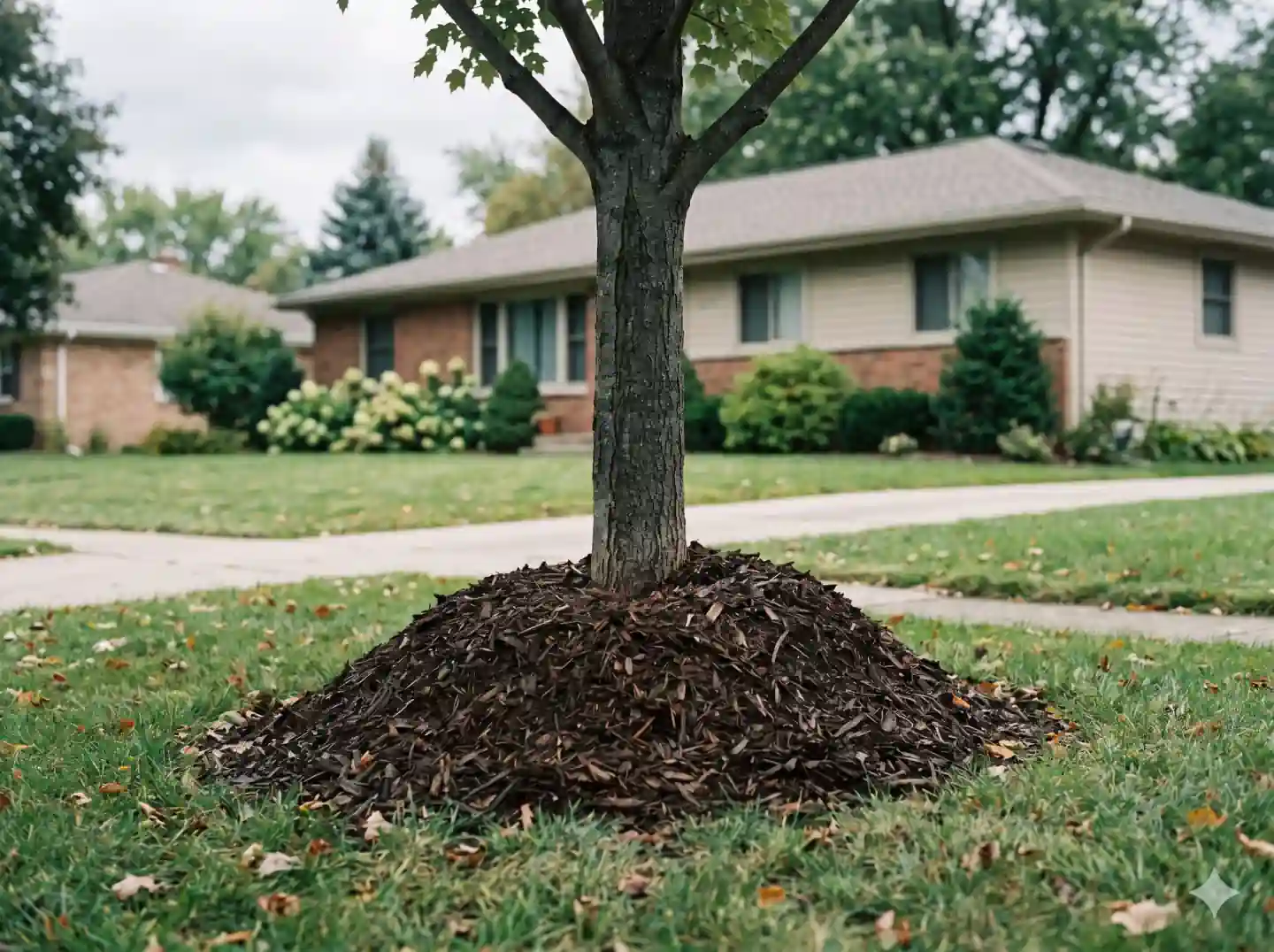
Mounded against the trunk. It traps moisture, rots bark, and invites voles. The most common — and most avoidable — landscaping mistake in suburbia.
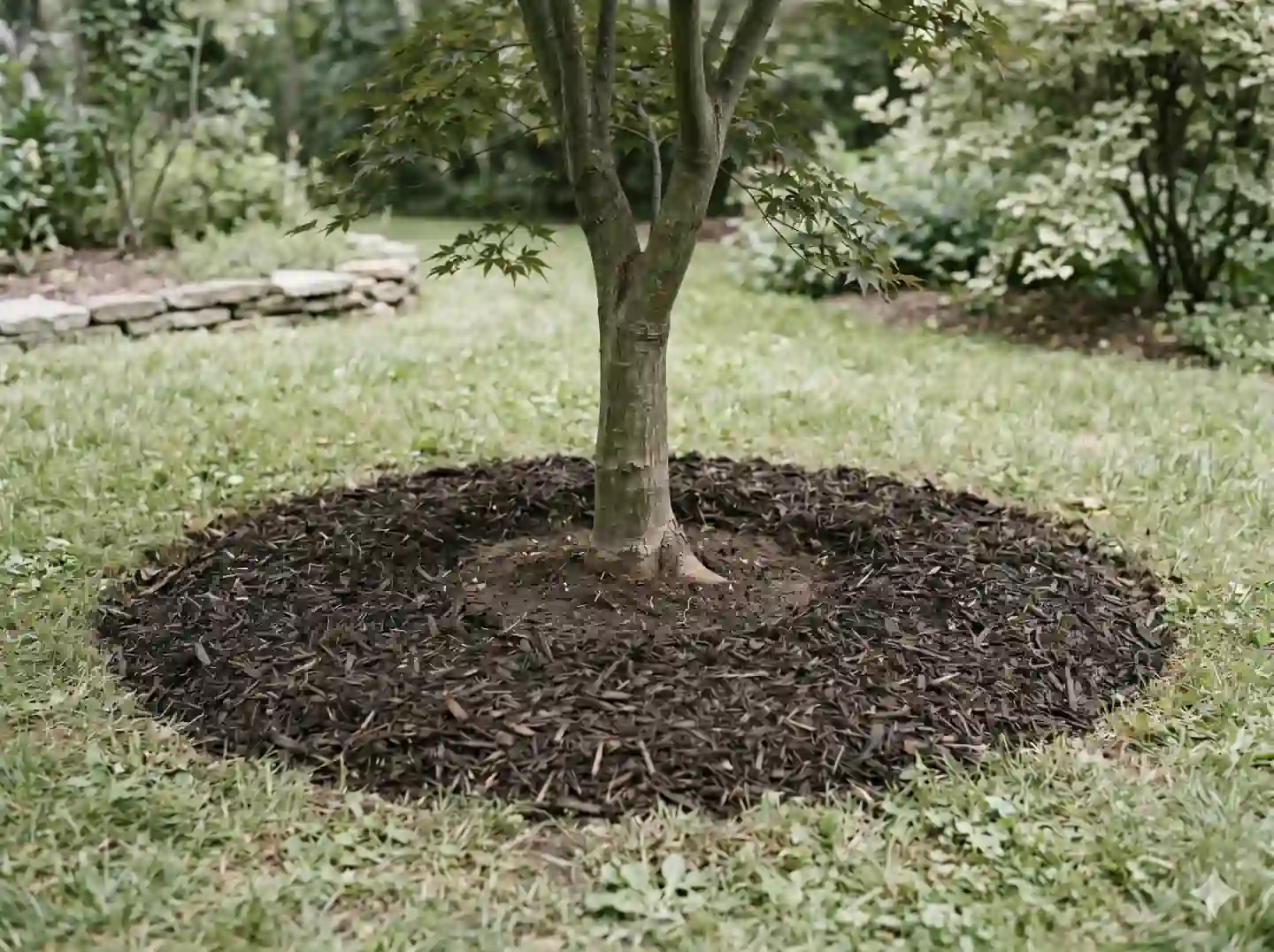
Flat ring, 2–3 inches deep, pulled back 3 inches from the bark. Insulates roots without suffocating the trunk. The way every arborist mulches their own yard.
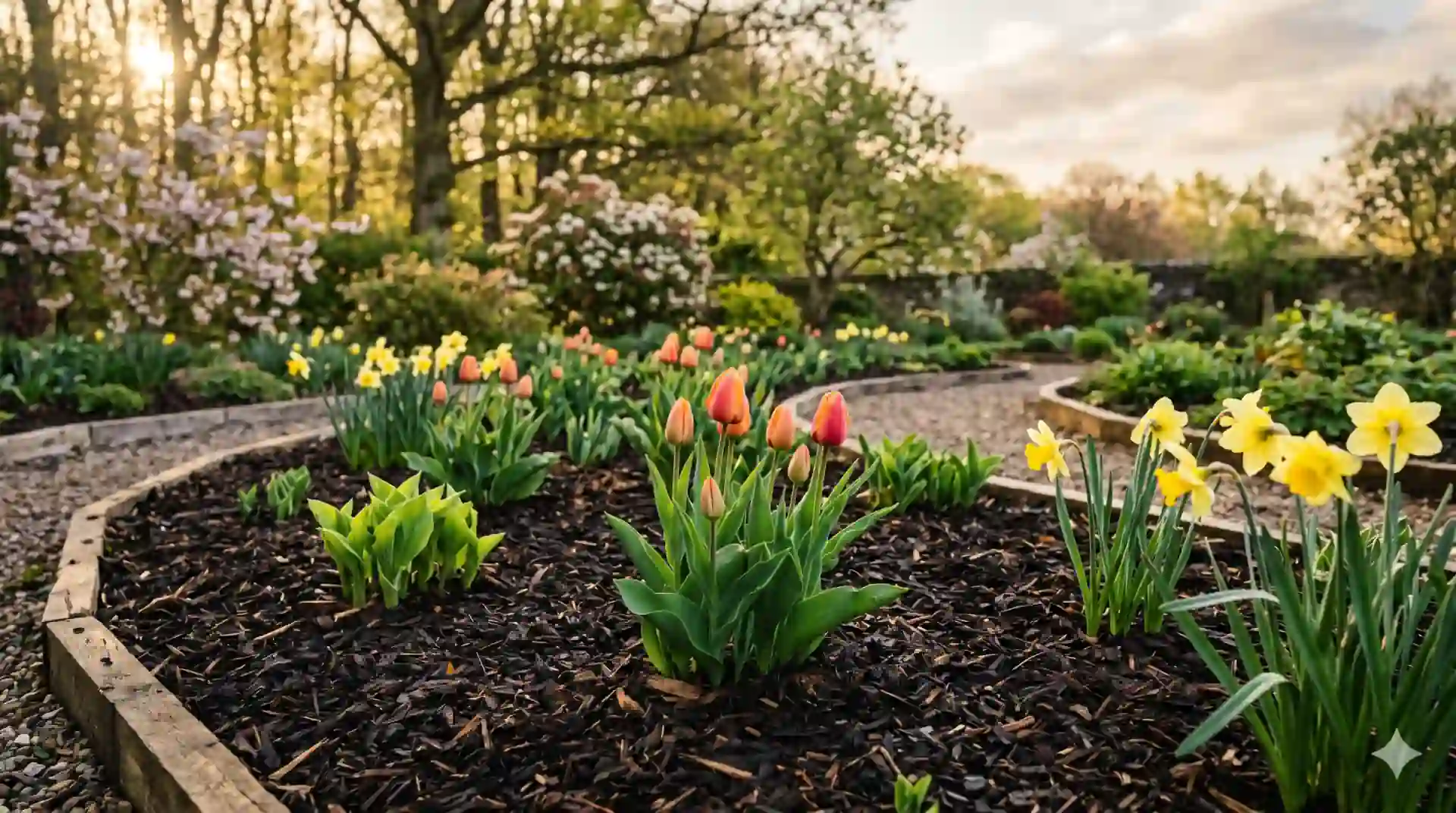
The two best windows are late spring — after the soil has warmed but before summer heat — and late fall, to insulate roots before frost. Mulching too early in spring traps cold soil and delays growth. Mulching too late in fall before the ground freezes can attract rodents looking for a warm winter home.
Refresh every 1–2 years for hardwood mulch, every 2–3 years for cedar, and immediately when color fades or the layer drops below 2 inches. Don't pile fresh mulch on top of compacted old mulch — rake the old layer first to break it up and improve drainage.
The most common questions we hear from gardeners, landscapers, and DIY weekend warriors.
Enter the length, width, or diameter of your bed, then choose a depth (typically 2–4 inches). The mulch calculator multiplies area by depth to give volume in cubic feet, then converts that to cubic yards, bags (2 cu ft or 3 cu ft), liters, and total cost.
A 10×10 ft bed (100 sq ft) at the recommended 3-inch depth needs 0.93 cubic yards, or about 12.5 bags of 2 cu ft mulch (round up to 13). At a typical $4.50 per bag, that's roughly $58 plus tax.
One cubic yard equals 27 cubic feet. That covers 324 sq ft at 1-inch depth, 162 sq ft at 2 inches, 108 sq ft at 3 inches, or 81 sq ft at 4 inches.
13.5 bags of 2 cu ft mulch equal one cubic yard. For 3 cu ft bags, 9 bags equal one cubic yard. Always round up — partial bags are not sold.
Three inches is the universal sweet spot. Use 2 inches for vegetable gardens, 3 inches for flower beds, and 4 inches for tree rings and weed suppression. Never exceed 4 inches around tree trunks — mulch volcanoes suffocate roots and invite pests.
Bulk delivery is almost always cheaper above 6 cubic feet (~3 bags). Bagged mulch averages $4–$6 per 2 cu ft, while bulk hardwood mulch runs $30–$50 per cubic yard delivered — roughly half the per-volume cost.
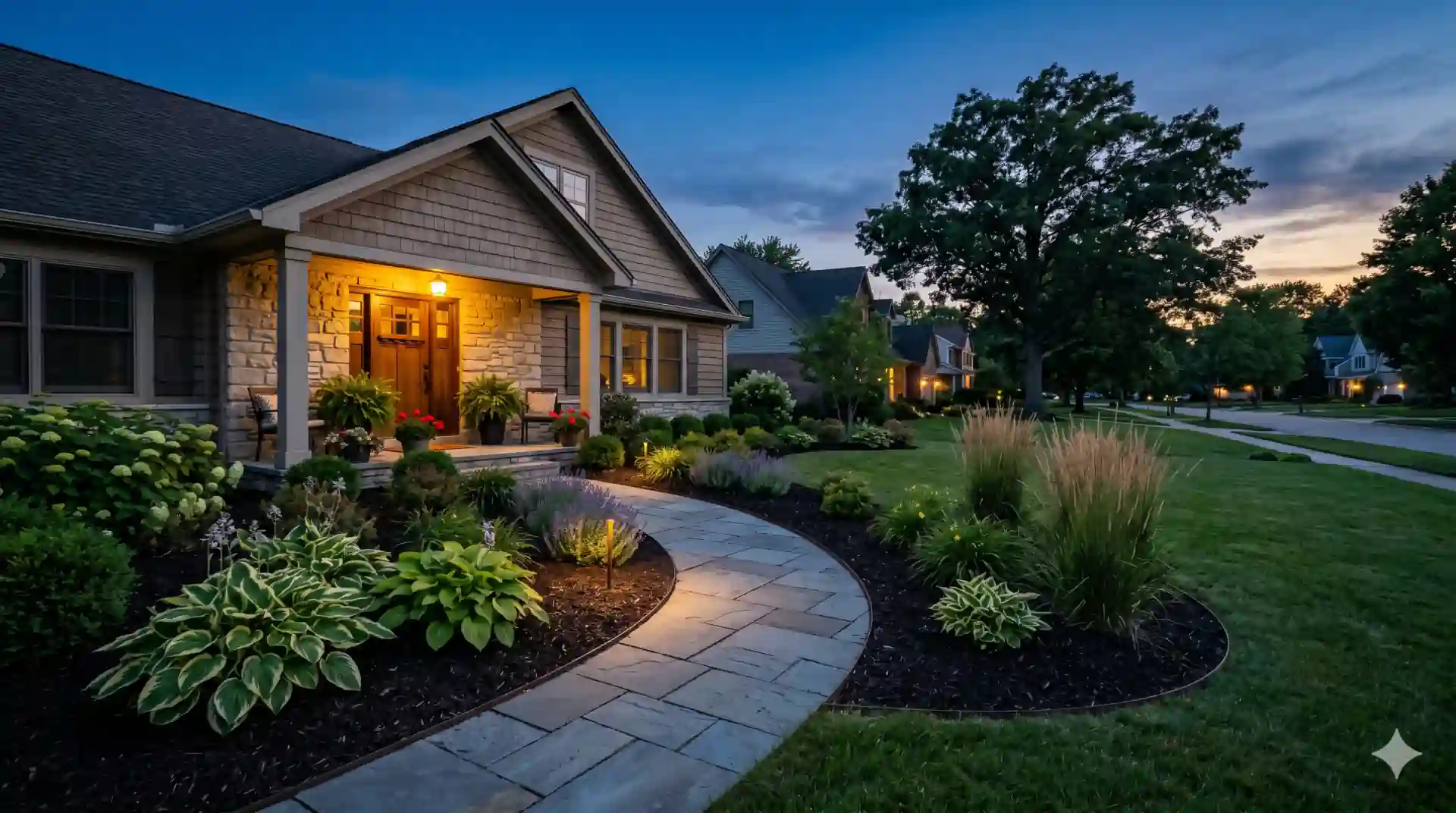
Scroll back up and try the mulch calculator. Calculations run instantly in your browser — no email, no signup, no tracking.
Use the calculator ↑