Flower Bed

Flower Bed Mulch Calculator

There are roughly two correct dates to mulch a perennial bed in temperate North America: late April through mid-May when soil hits 55°F, and a lighter fall pass in mid-September. Mulch too early and you delay bloom by 7–10 days; too late in fall and you trap moisture against frozen crowns. This calculator presets the 2–3 inch depth Cornell Extension recommends for ornamental beds and walks you through the seasonal calendar.
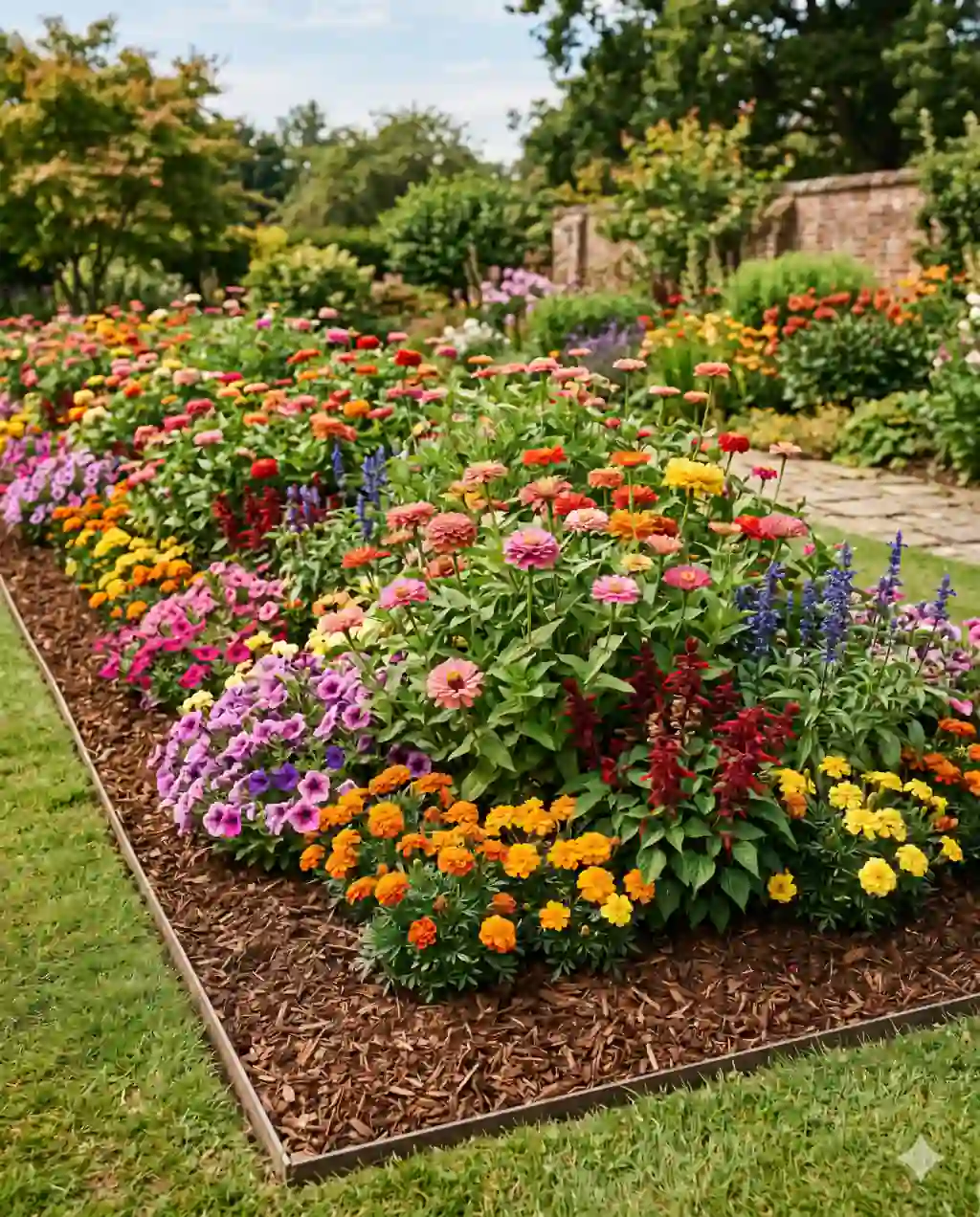
A colorful flower bed full of mid-summer annuals — zinnias, petunias, marigolds, salvia — growing through a 2-inch layer of brown hardwood mulch.
Photograph for MulchCalc.
The worksheet

Do the
math here.

Enter dimensions in the units you measured in. The page does the converting — cubic feet, cubic yards, bag counts, and price — without sending your numbers anywhere.

The flower-bed mulch calendar

Timing matters more for flower beds than for any other mulch job. Perennial crowns are alive year-round and the mulch layer directly controls how fast they warm in spring, breathe in summer, and survive in winter. The Cornell Cooperative Extension calendar below is keyed to soil temperature, not air temperature.

WindowSoil tempActionDepth
Late April – mid May55°F+Primary spring mulch — pull old mulch back, top-dress 1″ fresh2–3 inches
Late June – early July75°F+Optional refresh for color, post-emergenceTop-up to 2.5″
Mid September60°F fallingFall top-dress before leaf drop+0.5″ over existing
Late November – early DecemberBelow 40°FWinter crown protection in zones 3–5 only+1″ pine straw
Avoid: March – early AprilBelow 50°FMulch on cold soil delays bloom 7–10 days
The Royal Horticultural Society advises applying mulch at 5–7 cm (2–3 inches) deep around herbaceous perennials, kept clear of plant stems and crowns to prevent moisture-driven rot.
— Source: Royal Horticultural Society

Depth by USDA hardiness zone

Hardiness zones change how much summer moisture mulch needs to retain and how much winter cold the crown needs to be insulated from. Zone 5 gardeners use slightly deeper mulch in fall; zone 9 gardeners go thinner in summer to avoid trapping heat.

  • Zones 3–4 (Minnesota, North Dakota): 2.5–3″ spring, 3.5–4″ fall winter blanket over crowns.
  • Zones 5–6 (Ohio, NY, PA): 2–3″ spring, 3″ fall refresh, no extra winter layer needed.
  • Zones 7–8 (Virginia, NC, TN): 2–2.5″ spring, 2″ fall, skip winter mulch entirely.
  • Zones 9–10 (Florida, Gulf Coast): 1.5–2″ spring only, deeper layers trap summer heat and breed fungal disease.

Best mulch types for ornamental beds

  • Fine-shredded hardwood — locks together on slopes, 1–2 year lifespan, dark color flatters bloom palettes. The default choice.
  • Mini pine bark nuggets — 3–4 year lifespan, mildly acidifies soil. Ideal for azaleas, hydrangeas, rhododendrons.
  • Pine straw — light enough that emerging perennials punch through without help. Standard in Southeast US gardens.
  • Compost-mulch blend — adds nutrients but breaks down in one season. Best in established beds with no replanting planned.
  • Cocoa hull mulch — rich color and aroma, BUT contains theobromine. NEVER use in beds accessible to dogs; ingestion is toxic.

Worked example & spring refresh math

  1. Late April: Rake old mulch back from emerging shoots. Pull back 4–6 inches around each perennial crown.
  2. Apply 1″ fresh layer over existing mulch — never strip down to bare soil unless you have to.
  3. Hand-pull weeds first; mulch over weeds only buries them temporarily.
  4. Water in within 24 hours so the new layer mats with the old.

Reader Letters

Frequently asked questions

How deep should flower bed mulch be?+

2–3 inches, with 2.5 inches the Cornell Extension sweet spot. Light enough that emerging perennials can push through, thick enough to suppress weeds and retain ~30% more soil moisture than bare ground (RHS 105). Zone 9–10 gardens stay at 1.5–2 inches to avoid heat trapping.

How much mulch for a 50 sq ft flower bed?+

At 2.5-inch depth: 50 × 0.21 = 10.4 cu ft = 6 bags of 2 cu ft (with 10% buffer). About $27 at $4.50 per bag. A 1-inch spring top-dress over existing mulch needs only 3 bags — roughly $13.50.

What is the best mulch color for flower beds?+

Dark brown shredded hardwood or natural cedar. Black dyed mulch shows soil staining within weeks and reflects too much heat in zones 7+; red dyed clashes with most flower palettes. The RHS specifically recommends natural-color mulches around mixed perennial plantings.

Should I add weed fabric under the mulch?+

Skip it in perennial beds. Cornell Bulletin 245 documents that woven landscape fabric blocks the self-seeding cycle that keeps perennial beds full; it also tangles in roots when you eventually divide plants. Fabric works only in non-planted areas like foundation strips and gravel walkways.

When should I mulch flower beds?+

Late April to mid-May when soil reaches 55°F, then again mid-September before leaf drop. Avoid the March–early April window entirely — Cornell measured a 7–10 day bloom delay in beds mulched on cold soil. In zones 3–5 add a 1-inch pine straw winter blanket in late November.

How do I refresh fading mulch?+

Spring top-dress: rake old mulch lightly to break the crust, pull it back 4–6 inches from each plant crown, then add 1 inch of fresh mulch on top. Total depth holds at 2.5–3 inches and you use roughly 30% less material than starting from scratch. RHS-recommended technique.

Can mulch hurt my perennials?+

Yes, in two ways. Piled against crowns it causes rot — keep a 2-inch ring of bare soil around each plant. Applied too deep (over 4 inches) it suffocates roots and breeds fungal disease. Cocoa hull mulch is toxic to dogs at any depth — substitute pine fines if pets have access.

Pine bark or shredded hardwood for hydrangeas?+

Mini pine bark nuggets. They mildly acidify the soil over 2–3 seasons, which intensifies blue blooms on Hydrangea macrophylla. Shredded hardwood is pH-neutral and produces the pink blooms most varieties default to. Both work; pick the bloom color you want.