Ein monatlicher Mulchkalender
Das Timing des Gemüsemulchens folgt der Bodentemperatur, nicht dem Kalenderdatum. Eine 4-Zoll-Bodensonde ($12 in jeder Gärtnerei) sagt dir mehr als die Wettervorhersage. Im Frühjahr Mulch von Kaltsaisonbeeten abziehen, damit die Sonne den Boden erwärmt, dann erneut mulchen, sobald deine Warmsaison-Transplantate 6 Zoll hoch sind.
| Monat (US-Zonen 5–7) | Bodentemp 4 Zoll | Was mulchen | Tiefe |
|---|---|---|---|
| März | 38–48°F | Mulch von Karotten- und Erbsenbeeten ziehen — Boden warm werden lassen | 0 Zoll |
| April | 48–55°F | Kompostauflage über überwinterten Knoblauch und Zwiebeln | 1 Zoll |
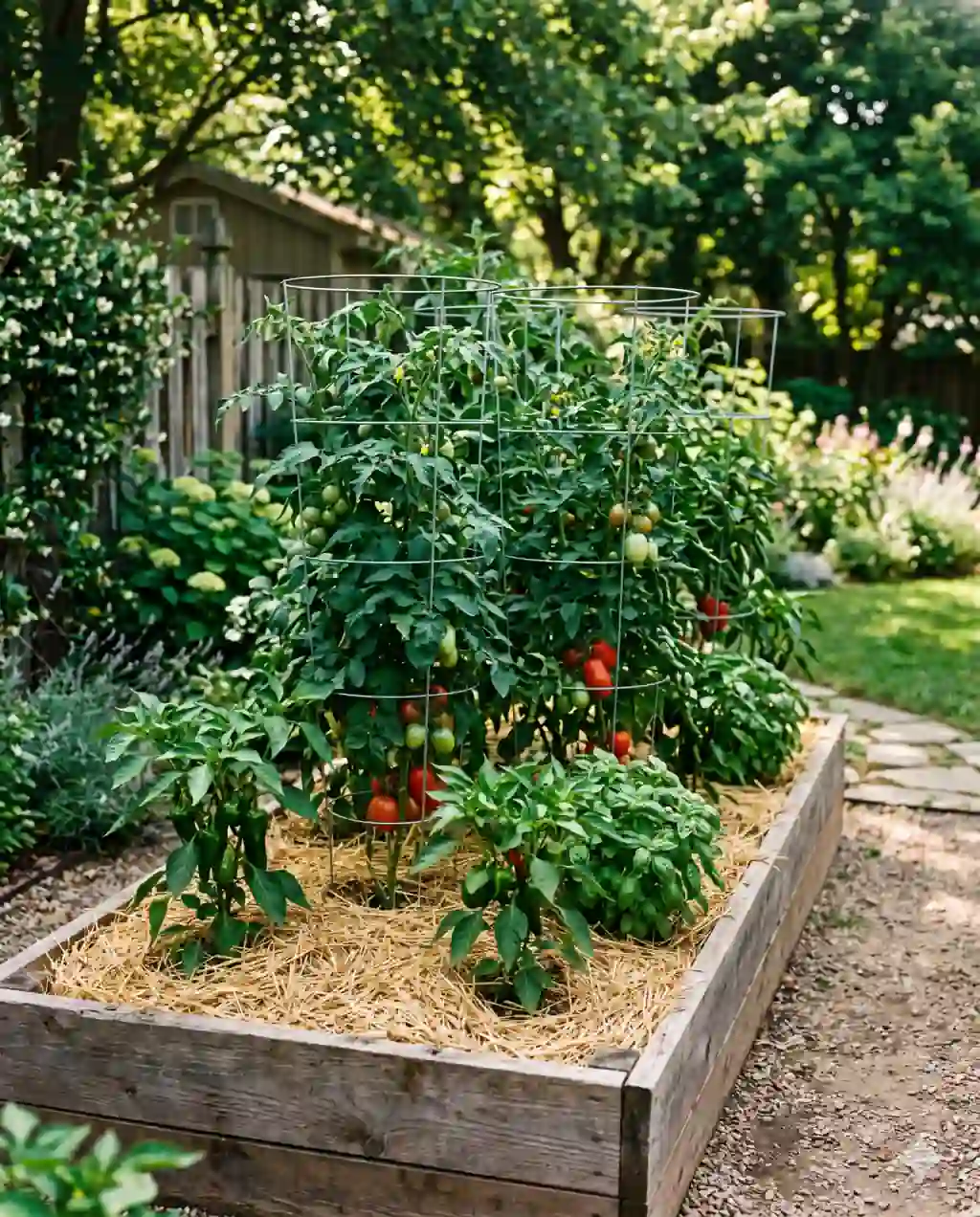
| Mai (nach letztem Frost) | 60–65°F | Stroh um Tomaten-, Paprika-, Kürbis-Transplantate | 1–2 Zoll |
| Juni–Juli | 70–80°F | Zweite Mulchschicht zur Feuchtigkeitsretention hinzufügen | 2 Zoll Gesamt |
| August | 75–82°F | Verdünnendes Stroh auf hitzegestressten Beeten auffrischen | 1 Zoll Nachfüllung |
| September–Oktober | 55–65°F | Geschredderte Blätter auf abgeräumten Beeten; Winterbeete sheet-mulchen | 3–4 Zoll |
Warum Gemüse 1–2 Zoll nutzt, nicht 3
Zier-Sträucher sitzen 5–10 Jahre im Mulch und vertragen 3-Zoll-Schichten. Einjährige Gemüse werden jährlich gezogen und neu gepflanzt, und die meisten sind direkt gesät oder als 4–6 Zoll Starts transplantiert. Eine 3-Zoll-Hartholzdecke blockiert physisch Bohnen-Keimblätter, fängt den kühlen Frühlingsboden, den Salat und Spinat zum Keimen brauchen, und beherbergt Schnecken, die Sämlinge über Nacht entlauben.
- Direkt gesäte Kulturen (Karotten, Rüben, Salat, Bohnen): nur mulchen nachdem Sämlinge 3 Zoll erreichen
- Transplantierte Warmsaisonkulturen (Tomate, Paprika, Kürbis): 1 Woche nach dem Pflanzen mulchen, sobald Wurzeln verankert sind
- Mehrjährige Gemüse (Spargel, Rhabarber): Standard 2–3 Zoll Mulch wie Zierpflanzen
- Knoblauch und überwinterte Zwiebelgewächse: 4–6 Zoll Stroh bei Herbstpflanzung; im März zurückziehen
Beste Mulche für Essbares (und was zu überspringen)
| Mulchtyp | Kosten (US 2026) | Am besten für | Vermeiden, weil |
|---|---|---|---|
| Weizen- oder Haferstroh | $6–$10 / Ballen (deckt 80 sq ft bei 2 Zoll) | Tomate, Paprika, Kürbis, Knoblauch | Heu (enthält Unkrautsamen) |
| Geschredderte Herbstblätter | Kostenlos, wenn aus dem eigenen Garten gesackt | Alle Sommergemüse | Ganze Blätter verfilzen und schütten Wasser ab |
| Reifer Kompost | $30–$50 / cu yd | Schwach zehrende Blattgemüse, Wurzelkulturen | Frischer Mist-Kompost (E.-coli-Risiko) |
| Rasenschnitt (trocken, dünn) | Kostenlos | Tomaten- und Kürbisreihen | Schnitt von herbizidbehandelten Rasen |
| Kiefernstroh | $5–$8 / Ballen | Erdbeeren, Heidelbeeren (säureliebend) | Kreuzblütler (zu sauer) |
| Gefärbter oder Gummimulch | $4–$15 / Sack | — | Spurenmetalle und Zinkauslaugung in Nähe von Lebensmittelkulturen |
Frische Hackschnitzel verdienen eine Fußnote. Penn State Extension und WSU-Forschung bestätigen beide, dass Hackschnitzel, die auf die Oberfläche aufgebracht werden, keinen Stickstoff aus der Wurzelzone ziehen — der Stickstoffentzug geschieht nur im obersten Viertelzoll des Bodenkontakts. Frische Hackschnitzel in ein Beet einzuarbeiten, hemmt Kulturen für eine ganze Saison; sie um reife Tomaten als Auflage zu verteilen, nicht.
Rechenbeispiel: ein 4 × 8 ft Hochbeet
Zum Vergleich: dieselben 32 sq ft mit reifem Kompost bei 1 Zoll gemulcht brauchen 2,67 cu ft (etwa 4 abgesackte Kubikfuß Kompost bei $5–$8 pro Sack oder eine Schubkarrenladung Hauskompost). Kompost verdoppelt sich als Mulch und Langzeitdünger und ersetzt eine Seitendüngung im Juni.
Herbst- und Wintermulch für die Ernte nächstes Jahr
Oktobermulchen ist, wo die meisten Gärtner zu wenig investieren. Eine 4-Zoll-Decke aus geschredderten Blättern oder Stroh auf abgeräumten Beeten verhindert Bodenerosion durch Winterregen, füttert Bodenbiologie und produziert bis April etwa einen halben Zoll neuen Humus — messbar als Krümelstruktur in einer Handvoll-Probe.
- Verbrauchte Pflanzen ziehen, aber Wurzeln im Boden lassen (Kohlenstoffbeitrag, langsame Zersetzung)
- 1 Zoll reifen Kompost als Auflage
- 3–4 Zoll geschredderte Blätter oder gehäckseltes Stroh schichten
- Einmal wässern, um die Schicht zu setzen; nicht einarbeiten
- Im März Mulch in Wege rechen, damit der Boden warm werden kann
Knoblauch- und Schalottenbeete brauchen das Gegenteil von nacktem Überwintern — Zehen im Oktober pflanzen, dann sofort mit 4–6 Zoll Stroh schwer mulchen. Cornell Cooperative Extension Knoblauchversuche berichten messbar größere Zwiebelgröße bei Ernte aus strohgemulchten Beeten im Vergleich zu nackten Bodenkontrollen in Zonen 5 und 6.