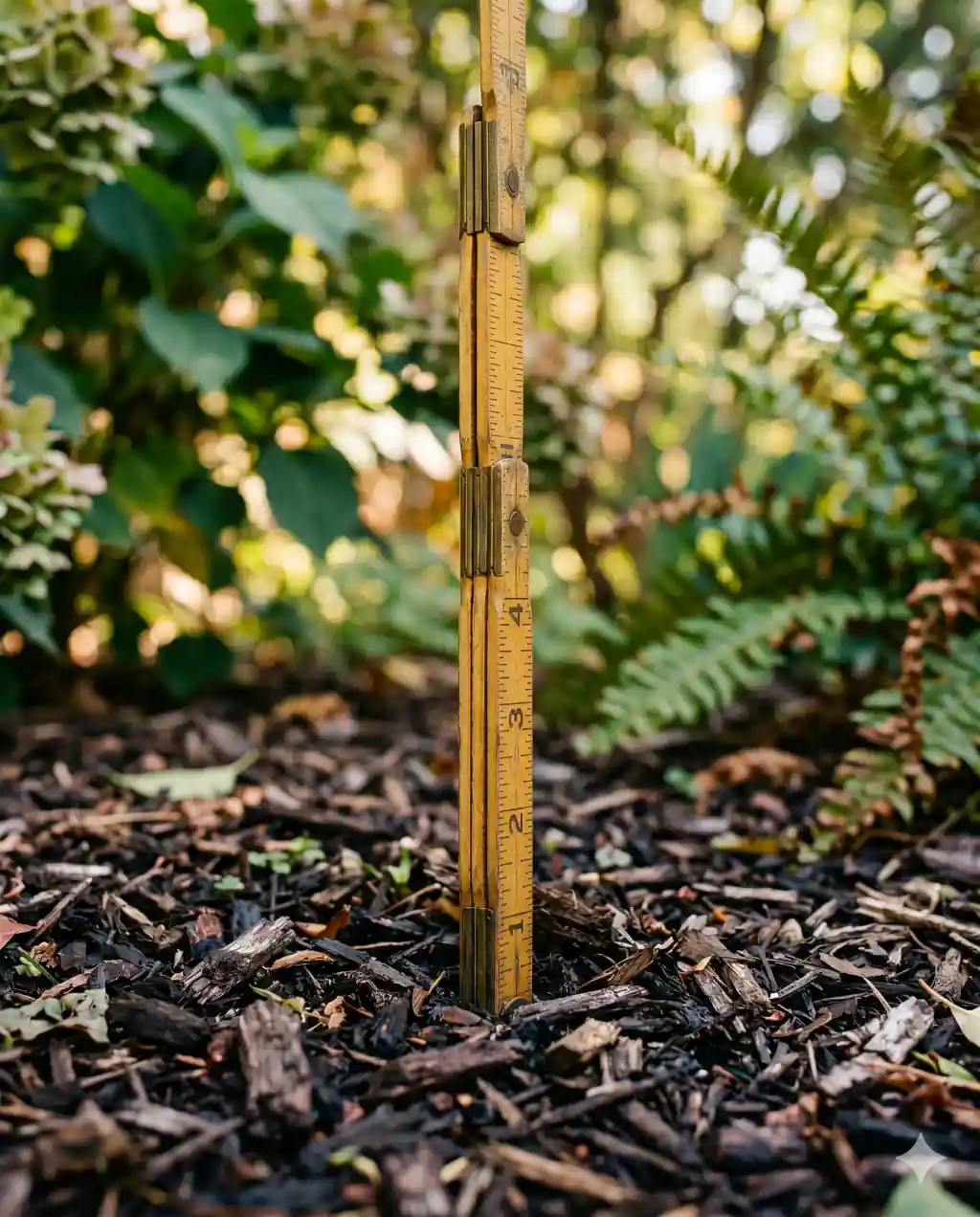
公開標準による厚さ
単一の「正しい」マルチング材の厚さは存在しません。正解はマルチング材が何をすべきかに依存し、各主要ユースケースには背後に書かれた標準があります。仕様や HOA リクエストで標準を引用すれば、ほとんどの紛争を排除できます。
| ユースケース | 厚さ | 統治標準 |
|---|---|---|
| 樹木の根域 | 2〜4″(標準 3″) | ANSI A300-2023 |
| 花壇と低木花壇 | 2〜4″(理想 3″) | Cornell Cooperative Extension / RHS guidance |
| 家庭菜園 | 1〜2″ | Iowa State Univ. Ext. guidance |
| 雑草抑制 | 3〜4″ | Penn State Extension |
| 庭の通路 | 4〜6″ | RHS guidance |
| 遊具場の表面 | Per certified product rating | CPSC 2025 + ASTM F1292/F2075 |
| 冬季根冠 | 3〜6″ | University of Minnesota Extension |
3 インチが観賞花壇の標準である理由
Cornell Cooperative Extension と Penn State Extension guidance はどちらも 2〜4 インチ範囲で 3 インチを標準推奨とすることに収束。理由は三つの測定された効果に基づきます。
- 光のブロック。ほとんどの雑草種子は発芽トリガーに 1〜3 個の赤色光光子を必要とします。3 インチの有機マルチング材は入射日光の 0.01% 未満を土壌表面に伝えます。
- 根域呼吸。4 インチを超えると吸収根への酸素拡散が裸土率の 60% を下回り — 嫌気性条件が始まり Phytophthora がリスクに。
Royal Horticultural Society は、宿根草の周りにマルチング材を 5〜7 cm 厚で敷き、茎や株元から離して湿気による腐敗を防ぐよう推奨している。
ANSI A300 ― 樹木の厚さとボルケーノ防止
ANSI A300-2023― Tree Care Operations: Mulching はアーボリストが従う米国国家標準。樹木マルチングに特化して扱い、一般観賞ガイダンスより保守的:
- セクション 4.2.1 ― 厚さ:有機マルチング材 2〜4 インチ、標準 3 インチ。
- セクション 4.2.2 ― テーパー:幹から 6 インチ以内で 1 インチに減らす。
- セクション 4.2.3 ― バッファ:樹皮と直接接触する裸土 2〜3 インチ — マルチング材接触は決して許さない。
- セクション 4.2.4 ― 範囲:サイト条件が許す限り、ドリップラインまで根域をカバー。
ANSI A300-2023は、樹木周りの有機マルチング材の厚さが根域上で 10 cm を超えないこと、幹で 2.5 cm まで漸減させ、樹皮周りに 5〜8 cm の乾燥バッファゾーンを残すことを定めている。
遊具場の厚さ ― ASTM F1292 と CPSC 325
Required depth is product-specific. Match the equipment fall height to the exact surfacing system's current ASTM F1292 critical-fall-height report, then use its tested installation and maintenance depth.
| Input | Source | Requirement |
|---|---|---|
| Equipment fall height | Equipment documentation or measurement | Record the highest applicable fall height |
| Surfacing critical fall height | Current ASTM F1292 product test report | Must meet or exceed equipment fall height |
| Installed depth | Certified product instructions | Use the stated installed and maintenance depth |
The 2025 CPSC handbook includes non-CCA wood mulch and wood chips as loose-fill options when the installed surface is impact-tested as required. EWF should comply with ASTM F2075; loose-fill rubber should comply with ASTM F3012. A material name alone does not establish ASTM F1292 performance.
余裕量・沈下・保守
体積式は入力した厚さの層を示します。有機マルチは分解・圧密・移動しますが、その量と時期は製品、現場、気候、取扱い、保守で変わります。追加前に既存層を測り、任意のバッファは現場固有の計画余裕としてのみ使ってください。